
Watch Demo
Watch Demo

Keeping employees engaged is not easy.
Many employees do their work without much recognition. Over time, this can lead to lower motivation and higher turnover.
Rewards and recognition programs help address this.
They give employees a reason to stay engaged and feel valued for their work.
Even small forms of recognition can make a noticeable difference.
Employee rewards and recognition programs are systems used to acknowledge employee contributions.
Recognition can be tied to specific actions or milestones.
Common examples include:
• reaching performance goals
• completing projects
• work anniversaries
• peer recognition
• going above normal expectations
Some programs focus on formal rewards, while others include informal recognition as part of company culture.
Employees want to feel that their work is noticed.
When recognition is missing, engagement often drops.
Recognition programs help reinforce positive behavior and create a more supportive work environment.
These programs can help:
• improve employee engagement
• reduce turnover
• increase productivity
• strengthen company culture
When employees feel valued, they are more likely to stay and perform at a higher level.
Employee rewards can take many forms depending on the company and the program structure.
Common reward types include:
• digital gift cards
• bonuses or cash incentives
• prepaid cards
• extra time off
• company perks or experiences
Digital rewards are widely used because they are easy to deliver and simple for employees to use.
Recognition and rewards are related but not the same.
Recognition is about acknowledging effort or achievement. It can be verbal, written, or public.
Rewards are tangible incentives given in response to that recognition.
Both are important.
Recognition helps employees feel appreciated. Rewards provide an additional incentive that reinforces behavior.
Strong programs usually include a mix of both.
Digital rewards make it easier to run recognition programs at scale.
Instead of manually distributing rewards, companies can automate the process.
This allows teams to:
• send rewards quickly
• manage programs across departments
• track participation and usage
• reduce administrative work
Employees receive rewards instantly, which makes recognition feel more immediate and meaningful.
Rewards are most effective when they are tied to specific actions or milestones.
Common trigger points include:
• hitting performance targets
• completing major projects
• celebrating anniversaries
• recognizing peer nominations
• achieving team goals
Clear triggers help ensure rewards are consistent and fair.
Complicated programs often fail because employees do not understand how they work.
Simple programs are more effective.
Some basic principles include:
• clearly explain how recognition works
• make rewards easy to receive
• keep criteria consistent
• avoid unnecessary rules
When employees understand the program, they are more likely to participate.
Employee rewards and recognition programs help companies build stronger teams and improve retention.
They create a structured way to acknowledge contributions while keeping employees engaged over time.
If you are building an employee program, you can also explore topics like sales incentives, digital rewards platforms, and other incentive strategies used across different teams.
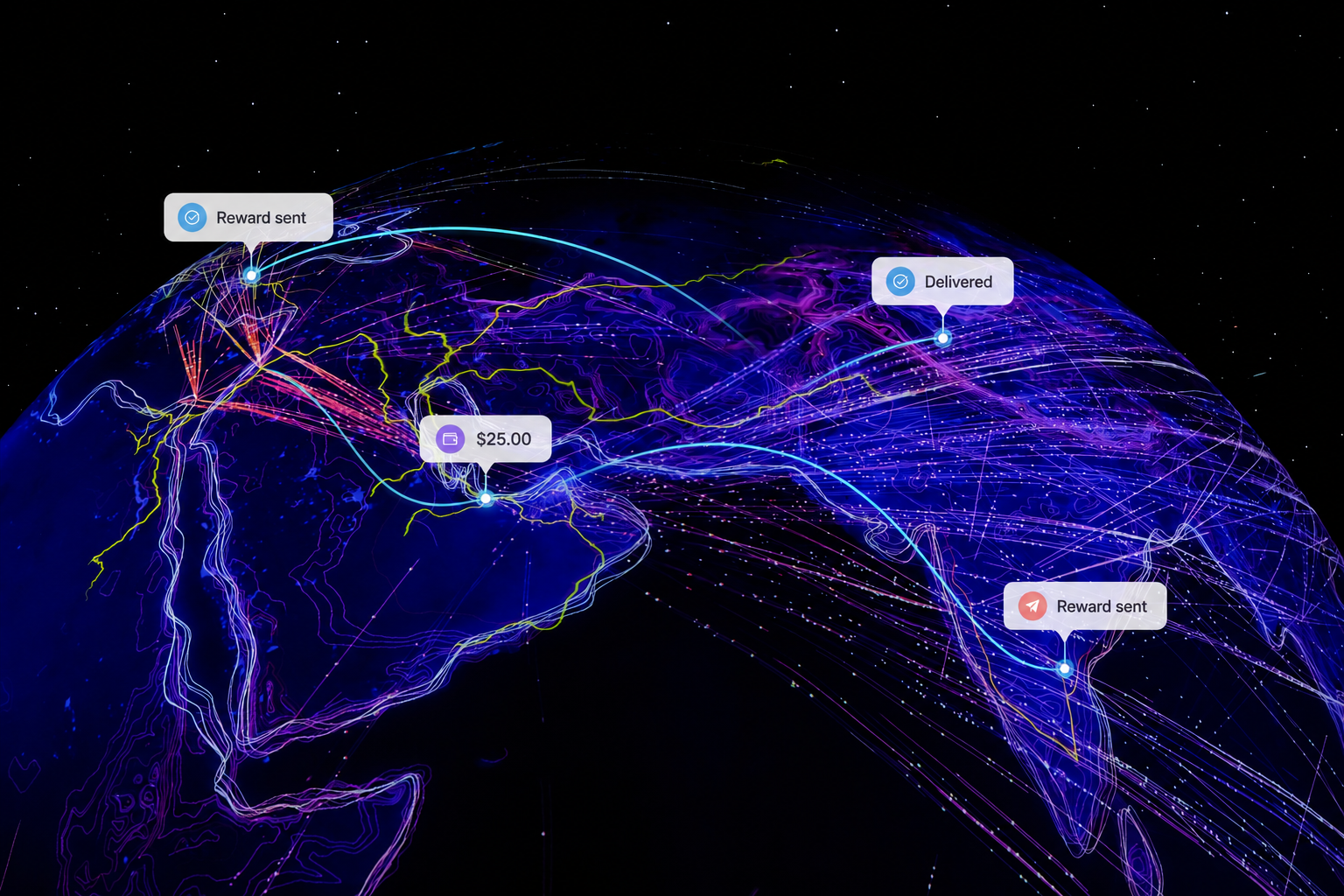
How global rewards distribution works: reward availability by market, value equivalence vs currency conversion, compliance, delivery, and what to localize.
Read More ➞
What a reward API does, how the integration works, why idempotency matters, webhooks vs polling, funding, testing, and when you do not need one at all.
Read More ➞
How gift card incentives work: open vs closed loop, choosing denominations, delivery, breakage, fraud, and when a gift card is the wrong reward to send.
Read More ➞Built on global gift-card infrastructure, ORBT connects your business to thousands of brands, enabling seamless digital value distribution at scale.
Contact Sales