Customer Shares
An existing customer sends a referral link, code, or offer to someone in their network.

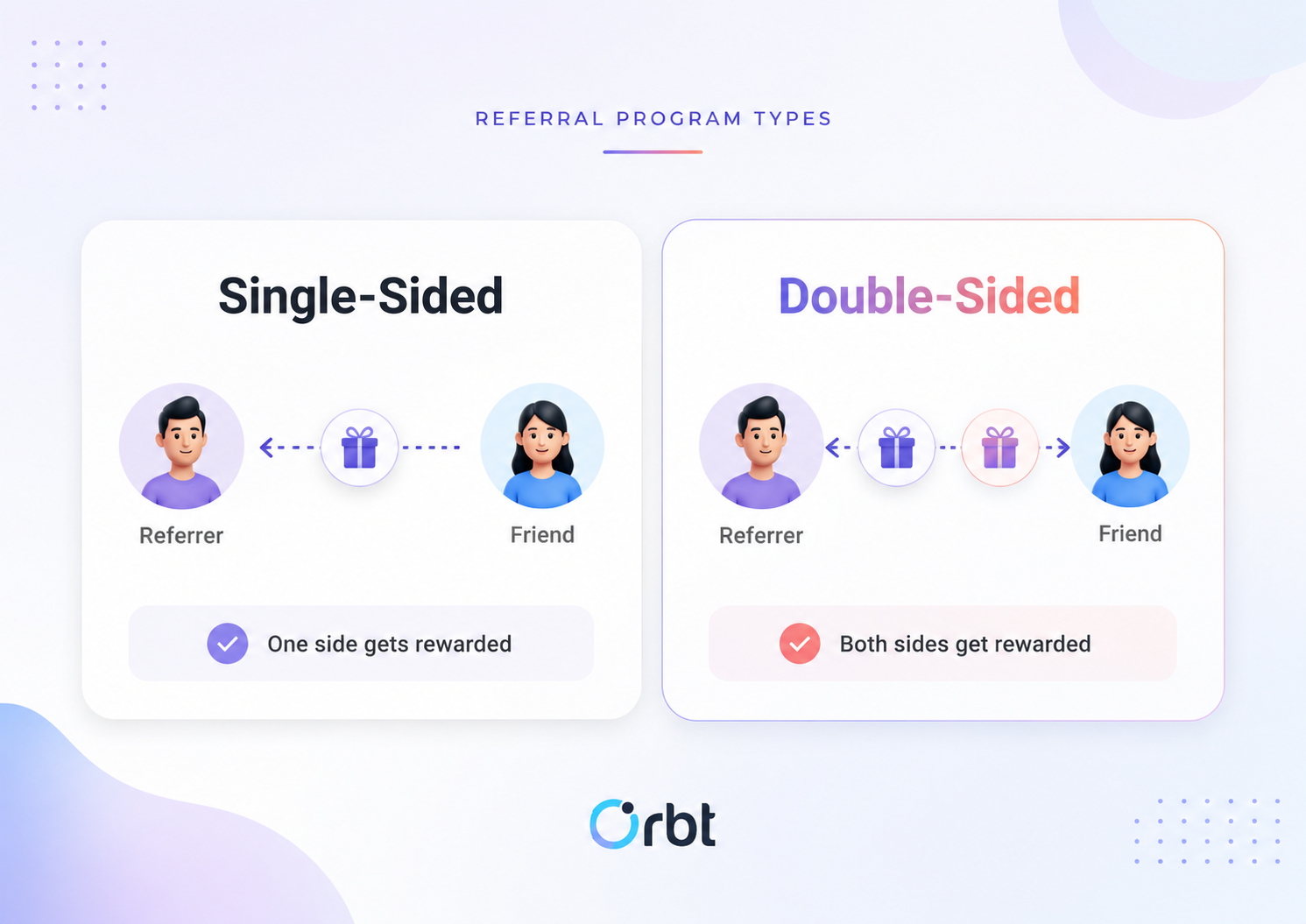
A double-sided referral program rewards both the person making the referral and the person being referred. Instead of asking a customer to promote your business only for their own benefit, you give them something valuable to share with a friend, colleague, client, or peer.
That small difference matters. A single-sided referral program can work when people are highly motivated to earn a reward. But a double-sided referral program usually feels more natural because the referrer is not just saying, “Try this company so I can get something.” They are saying, “Here is something useful for you, too.”
That is why double-sided referral rewards are common in ecommerce, SaaS, financial services, healthcare, research panels, memberships, marketplaces, and other industries where trust plays a major role in customer acquisition. If you are still comparing incentive options, it can also help to review practical referral reward ideas before choosing a final structure.
In this guide, we’ll break down how double-sided referral programs work, when they make sense, what kinds of rewards to offer, and how to structure them without overcomplicating the program.
A double-sided referral program is a referral marketing program where both sides of the referral receive an incentive when the desired action is completed.
Usually, the two sides are:
For example, an ecommerce brand might offer an existing customer $20 in store credit when their friend makes a first purchase. The friend might also receive $20 off their first order. The referrer has a reason to share, and the new customer has a reason to act.
That is the core idea: both people get something valuable, and the business gets a warmer acquisition channel than a cold ad, search campaign, or outbound email.
Double-sided referral programs are sometimes called two-sided referral programs, give-and-get referral programs, or refer-a-friend programs. The terminology varies, but the structure is the same: one referral creates value for both participants.
Most double-sided referral programs follow a simple path.
The reward does not always need to be cash. Depending on the business, it could be a digital gift card, store credit, account credit, loyalty points, a discount, a free month, a donation, an experience, or an exclusive upgrade.
The important part is that the reward feels relevant to each side. The referrer should feel like the program is worth sharing. The referred person should feel like they are getting a legitimate reason to try the business now.
A single-sided referral program rewards only one person. In most cases, that person is the referrer. They share the business, someone converts, and the referrer gets a reward.
A double-sided referral program rewards both people. The referrer gets a reward for making the introduction, and the referred customer gets an incentive for joining, buying, booking, or taking action.
Neither model is automatically better in every situation. The right choice depends on your margins, buying cycle, customer behavior, brand trust, and the type of action you want people to take.
Single-sided referral programs can be easier to launch because there is only one reward to configure, fund, and communicate. They can also be more cost-effective when the referred customer already has a strong reason to buy. But they may feel less compelling because the referred person receives no immediate benefit.
Double-sided referral programs can be more persuasive because both people have a clear reason to participate. The referrer can offer something helpful, and the referred person has a stronger reason to respond. The tradeoff is that double-sided programs often cost more and require cleaner tracking.
Referral marketing works because it starts with trust. A recommendation from someone familiar usually carries more weight than an ad from a brand the person has never interacted with before.
A double-sided reward adds another layer to that trust. The referrer is not only recommending the product. They are giving the other person a benefit for trying it.
That changes the tone of the referral. It becomes less transactional and more generous. Instead of feeling like a sales pitch, the referral feels like a shared opportunity.
Many people are hesitant to refer friends if they feel like they are only doing it for personal gain. This is especially true in industries where trust, reputation, or professional relationships matter.
A double-sided program gives the referrer a better reason to share. They are not just earning a reward. They are also giving someone else a useful offer.
That can make the referral feel more comfortable, especially in B2B, healthcare, financial services, memberships, high-ticket ecommerce, and professional services.
A referral may create awareness, but awareness does not always create action. The referred person still needs a reason to sign up, schedule, buy, or continue through the process.
The referred-side incentive helps close that gap. It gives the new customer a clear reason to take the next step.
That incentive could be immediate, like a first-purchase discount or digital gift card. It could also be delayed, like account credit after the first paid invoice or a gift card after completing a survey.
The best referral programs are easy to explain. A double-sided structure often creates a clean message:
Give $20, get $20.
Give a free month, get a free month.
Give a reward, earn a reward.
Simple programs are easier to share, easier to remember, and easier to promote across email, landing pages, customer portals, checkout flows, mobile apps, and support conversations.
A referral program is not only an acquisition tool. It is also a customer engagement tool.
When customers are invited to share a brand and receive value in return, they may become more invested in the business. The reward can reinforce loyalty, especially when it brings the customer back into the product or service.
For example, store credit encourages another purchase. Account credit encourages continued use. Loyalty points keep the customer inside the brand ecosystem. A digital gift card can create a more flexible reward experience when the brand does not have frequent repeat purchases.
A double-sided referral program is usually worth considering when the referred person needs an extra nudge to act, or when the referrer needs a better reason to share.
It is especially useful when trust is important, the product has a meaningful purchase decision, the customer base is engaged, and the business can afford to reward both parties after a qualified conversion.
If the referred person has to create an account, make a purchase, book a call, complete onboarding, or switch from another provider, the referred-side incentive can help reduce friction.
This is why double-sided referral programs are common in SaaS, ecommerce, financial services, subscription services, and consumer apps. The friend may trust the recommendation, but the reward gives them a concrete reason to act now.
Some customers will not share a referral if they think it makes them look pushy. This is especially common when referrals happen between friends, coworkers, clients, or professional peers.
Giving the referred person a benefit makes the referral easier to send. The customer is not just promoting a company. They are passing along something useful.
A double-sided program is easier to justify when a new customer has meaningful lifetime value. If a referred customer is likely to subscribe, reorder, upgrade, renew, or stay for a long time, rewarding both sides can make financial sense.
The key is to connect the reward to a conversion event that protects the business. For example, you may not want to reward both sides for a free signup if many signups never become customers. Instead, you might trigger rewards after a first purchase, first paid month, completed appointment, approved application, or verified participation.
Some products become more valuable when more people join. Examples include collaboration tools, financial apps, marketplaces, communities, membership programs, and platforms with shared workflows.
In those cases, a double-sided program can encourage faster adoption because both the sender and the recipient benefit from participation.
Double-sided referral programs are powerful, but they are not always the right choice.
If your margins are thin, your referral volume is low, your conversion tracking is weak, or your product has very low repeat purchase potential, rewarding both sides may create unnecessary cost.
If the business cannot afford two rewards per conversion, a double-sided structure can quickly become a problem. This is especially true when the reward is paid before the customer becomes profitable.
In that case, you may need a smaller reward, a delayed reward, a store-credit reward, or a single-sided structure.
Any reward program can attract people who care more about the incentive than the product. Double-sided programs may increase that risk because two people are being rewarded.
To manage this, the reward should be tied to a meaningful action. Businesses should avoid paying out rewards for weak signals unless they have a clear reason to do so.
A newsletter signup, free trial, or app install may be useful in some cases. But for many businesses, the better trigger is a qualified purchase, appointment, subscription, application approval, survey completion, or verified account activation.
A single-sided program only needs to reward one person. A double-sided program needs to track both people, connect them to the same referral event, confirm the conversion, and issue the right reward to each side.
That does not mean the program has to be complicated. But it does mean the business should have a clear system for referral links, reward rules, fraud prevention, and customer communication.
The best double-sided referral program is not always the one with the biggest reward. It is the one where the incentive matches the business model, customer motivation, and conversion goal.
Here are some common structures.
This is one of the cleanest structures for ecommerce, SaaS, subscriptions, marketplaces, and membership programs. The referred customer gets credit toward their first purchase or first paid period. The referrer gets credit after the referred customer converts.
This works well when customers are likely to buy again or continue using the product. It also keeps reward value inside the business rather than paying out cash immediately.
In this structure, the referred person receives a discount, while the referrer receives a different reward, such as store credit, account credit, points, or a digital gift card.
This can work well when the referred person needs a lower-friction entry point, but the business wants the referrer reward to feel more tangible.
This is common in SaaS, apps, subscriptions, and service businesses. The referred person receives a free trial, extended trial, free month, free consultation, or first-use incentive. The referrer receives a bonus once the referred person becomes a qualified customer.
This structure works best when the product needs to be experienced before purchase.
Digital gift cards are useful when the business does not have a natural credit system or when the referrer may not need another purchase from the brand.
This is common for research incentives, surveys, healthcare programs, financial services, B2B referrals, and customer advocacy programs. For teams building programs around participant motivation, ORBT’s broader research incentives content can support that planning process.
Gift cards can feel flexible and easy to understand, but they should still be tied to a qualified conversion so the program stays profitable.
This structure works well for loyalty programs, rewards programs, apps, communities, and marketplaces.
Both sides receive points that can be redeemed later. This can reduce immediate cash cost and keep people engaged inside the broader rewards ecosystem.
Different industries need different reward structures. A reward that works well for ecommerce may not make sense for healthcare, financial services, or B2B software.
A common ecommerce structure is “give $15, get $15” or “give 20%, get $20.” The referred customer receives a discount or credit toward their first purchase. The existing customer receives store credit after the first purchase is completed.
This works well when the brand has repeat purchase potential. Store credit encourages the referrer to come back and buy again.
SaaS referral programs often use account credit, free months, plan upgrades, or usage credits. The referred user may receive a free trial or credit toward their first paid month. The referrer may receive account credit after the referred user becomes a paying customer.
This works best when the reward reinforces continued product usage rather than pulling value out of the platform.
Financial services companies often use digital gift cards, cash-equivalent rewards, account bonuses, or statement credits. Because compliance and eligibility rules matter, the program should be clear about who qualifies, when rewards are issued, and what actions trigger the payout.
In this category, trust and clarity are especially important. The reward should feel professional, not gimmicky.
Healthcare referral programs require more care because rules, privacy, and compliance expectations may vary by business type and location. In many cases, wellness rewards, thank-you gifts, account credits, or approved incentive options may be more appropriate than aggressive cash offers.
The referred person’s reward might be tied to booking, attending, enrolling, or completing an eligible action. The referrer’s reward should be structured in a way that fits the organization’s policies and legal requirements.
Research panels, survey programs, and user research teams can use double-sided incentives to recruit participants more efficiently. The referred participant may receive an instant eGift after completing a qualified survey or study, while the referrer receives a reward after the referral is verified.
This helps encourage participation without rewarding incomplete, duplicate, or low-quality responses. If surveys are the main use case, the same logic applies to broader survey incentives where timing, verification, and reward value all affect response quality.
B2B referral programs often work best when the reward is tied to a qualified lead, booked meeting, signed contract, or first invoice. The referred company might receive a service credit, onboarding credit, or discounted first engagement. The referrer may receive a digital gift card, account credit, charitable donation, or partner incentive.
Because B2B purchases take longer, the program should make the reward trigger very clear.
One common mistake is assuming both sides need the exact same reward. They do not.
The referrer and the referred customer may have different motivations. A current customer may value account credit because they already use the product. A new customer may value a first-purchase discount because they are not ready to commit yet.
Good double-sided referral programs match the reward to the participant.
The referrer reward should answer one question: “Is this worth sharing?”
Good referrer rewards include:
The best choice depends on whether the business wants to drive repeat engagement, reward advocacy, reduce cash cost, or create a flexible thank-you experience. This is where a flexible digital rewards platform can help teams support different incentive types without rebuilding the program for every campaign.
The referred-side reward should answer a different question: “Why should I act now?”
Good referred-customer rewards include:
The referred reward should reduce friction. It should make the first step easier without attracting the wrong audience.
The reward trigger is one of the most important parts of the program. It defines when the referral counts and when rewards are issued.
If the trigger is too early, the business may pay for low-quality referrals. If the trigger is too late, customers may lose interest because the reward feels too far away.
Common reward triggers include:
For low-risk, low-cost programs, a signup trigger may be acceptable. For higher-value rewards, the trigger should usually be tied to revenue, qualification, completion, or verification.
A double-sided referral program should be designed around unit economics, not just generosity.
Before launching, the business should know the value of a referred customer, the cost of both rewards, the expected conversion rate, and the point at which the referral becomes profitable.
A simple way to think about it is:
Total reward cost should be reasonable compared to the value of the new customer.
That value might be measured by first purchase value, gross margin, average order value, subscription lifetime value, or expected account value.
Delayed rewards can protect the business from paying too early. For example, the referrer might receive the reward only after the referred customer completes their first purchase, stays subscribed for 30 days, attends an appointment, or completes a verified activity.
This keeps the incentive tied to real business value.
Credits can be more cost-effective than cash because they encourage future engagement. Store credit brings the referrer back to buy. Account credit keeps SaaS users active. Loyalty points keep customers inside the brand’s reward system.
This does not mean credits are always better than digital gift cards or cash-equivalent rewards. It means they should be considered when the business wants the reward to reinforce retention.
Referral caps can help manage cost and fraud. A business might limit rewards per person, per month, per campaign, or per household. It might also restrict self-referrals, duplicate accounts, suspicious payment methods, or repeated use of the same device or address.
These rules should be clear enough to protect the business without making the program feel hostile to legitimate customers.
Double-sided referral programs can underperform when the structure is unclear, the reward is weak, or the trigger does not match the business model.
If customers cannot explain the offer in one sentence, they are less likely to share it.
A good referral message should be simple: “Give $20, get $20.” “Give a free month, get a free month.” “Invite a friend and you both get a reward after their first purchase.”
Not every action deserves a reward. A free signup, unqualified lead, or incomplete form may not create enough value to justify two incentives.
The reward trigger should reflect the quality of the conversion. For many businesses, that means rewarding after a purchase, payment, appointment, completed study, approved application, or other verified milestone.
A referral reward does not need to be huge, but it does need to feel useful.
A discount may work for a new customer, but it may not motivate a current customer who does not plan to buy again soon. Store credit may work for frequent buyers, but a digital gift card may work better for infrequent purchases, research incentives, or B2B referrals.
A referral program does not end when someone clicks the link. The referred person still needs a clear landing page, a trustworthy explanation, a visible reward, and an easy next step.
If the landing experience is confusing, the referral may fail even if the reward is strong.
Any incentive program can be abused. Double-sided programs need safeguards because both parties may receive value.
Common protections include email verification, unique referral links, purchase validation, minimum spend thresholds, duplicate account detection, referral limits, manual review for high-value rewards, and clear program terms.
A referral program only works if people know it exists. Too many businesses launch a program, add one link in the footer, and expect customers to find it on their own.
Promotion should be built into the customer journey.
Good places to promote a double-sided referral program include:
The best timing is usually after a positive customer moment. That might be after a purchase, after a good support experience, after a completed project, after a positive review, or after a customer reaches a usage milestone.
A double-sided referral program should be measured like a customer acquisition channel, not just a giveaway.
Important metrics include:
The strongest programs are optimized over time. Businesses can test different rewards, different reward triggers, different landing page messages, and different promotion points in the customer journey.
The goal is not just to get more referrals. The goal is to get more qualified customers at an acquisition cost that makes sense.
A double-sided referral program rewards both the person making the referral and the person being referred. For example, the referrer might receive a digital gift card after their friend makes a purchase, while the friend receives a first-order discount or welcome credit.
Double-sided referral programs often convert well because both people have a reason to participate. The referrer gets rewarded for sharing, and the referred person gets an incentive to act. However, single-sided programs may be better when margins are tight, the referred customer already has strong buying intent, or the business wants to keep the program simpler.
Common rewards include store credit, account credit, discounts, digital gift cards, loyalty points, free trials, free months, cash-equivalent rewards, and exclusive perks. The best reward depends on the business model and what each side values.
Not always. Many programs use different rewards for each side. For example, the referred customer may receive a first-purchase discount, while the referrer receives account credit or a digital gift card after the purchase is completed.
Rewards should usually be issued after a qualified action. That could be a first purchase, first paid subscription, completed appointment, approved application, completed survey, or another verified milestone. For high-value rewards, avoid paying out too early.
Yes, but the structure usually needs to reflect a longer sales cycle. B2B companies may reward referrals after a qualified demo, signed contract, first invoice, or completed onboarding. The referred company might receive a service credit, onboarding credit, or introductory offer.
Common safeguards include verified emails, unique referral links, purchase validation, minimum spend thresholds, duplicate account detection, referral limits, manual review for high-value rewards, and clear terms that prohibit self-referrals or abuse.
A good double-sided referral program does more than pay people to share a link. It creates a simple value exchange where the referrer feels good about recommending the business, the referred person gets a useful reason to try it, and the business earns a warmer path to new customers.
The best programs are easy to understand, relevant to the customer, tied to a meaningful conversion event, and supported by rewards people actually want.
If your business is building a referral, loyalty, research, employee, or customer incentive program, ORBT can help you deliver flexible digital rewards at scale. To learn more, visit ORBT’s contact page.
How global rewards distribution works: reward availability by market, value equivalence vs currency conversion, compliance, delivery, and what to localize.
Read More ➞
What a reward API does, how the integration works, why idempotency matters, webhooks vs polling, funding, testing, and when you do not need one at all.
Read More ➞
How gift card incentives work: open vs closed loop, choosing denominations, delivery, breakage, fraud, and when a gift card is the wrong reward to send.
Read More ➞Built on global gift-card infrastructure, ORBT connects your business to thousands of brands, enabling seamless digital value distribution at scale.
Contact Sales