
Watch Demo
Watch Demo
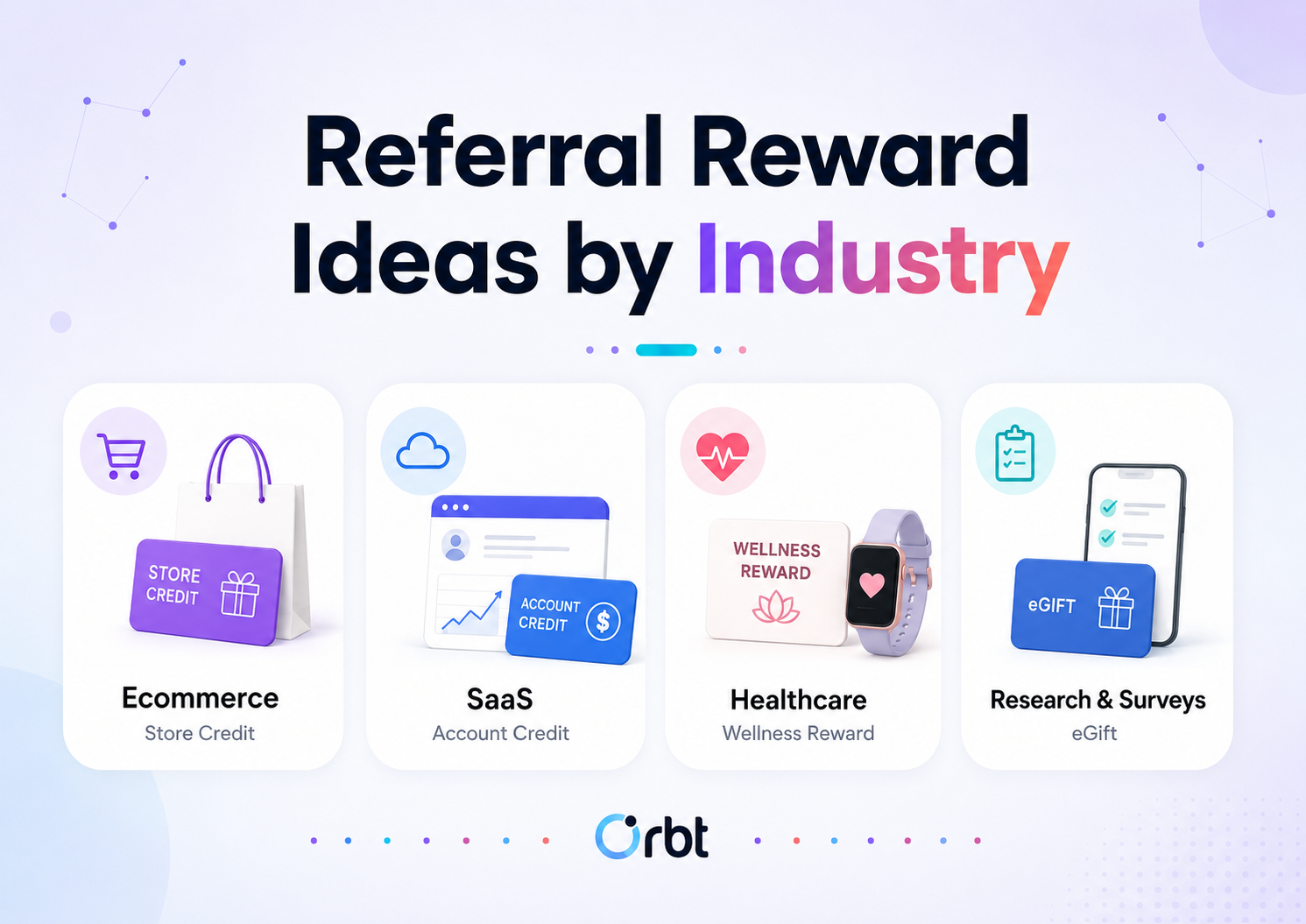
The success of a referral program depends on more than simply asking customers to recommend your business. People are much more likely to participate when there is a clear incentive that feels worthwhile.
That does not necessarily mean offering the biggest reward. The most effective referral incentives match the value of the customer being acquired while remaining simple to understand and easy to redeem.
Some businesses see great results with digital gift cards, while others find success using store credit, loyalty points, or exclusive experiences. The right reward depends on your audience, your industry, and what action you are asking customers to take.
If you are looking for ideas, here are some of the most effective referral rewards businesses use today.
Before choosing a reward, it is worth considering why some referral programs outperform others.
Successful referral rewards are usually easy to understand, valuable to the customer, delivered quickly, relevant to your business, and worth the effort required to earn them.
A complicated reward with pages of terms and conditions often performs worse than a smaller reward that is simple to redeem.
For a broader overview of how referral programs work, you may also want to review referral rewards and how businesses use them to encourage word-of-mouth growth.
Digital gift cards continue to be one of the most popular referral incentives because almost everyone understands their value. They are easy to deliver, easy to redeem, and give recipients the freedom to choose how they use the reward.
Businesses also benefit because digital fulfillment can often be automated, reducing administrative work while providing an immediate reward after a successful referral.
Common examples include Amazon, Visa prepaid cards, Starbucks, Target, Walmart, and hundreds of other retailer gift cards.
This type of reward is especially useful for SaaS, healthcare, research, financial services, ecommerce, and retail brands.
Instead of giving customers money they can spend anywhere, many retailers reward successful referrals with store credit.
This encourages the customer to return while lowering the effective acquisition cost since the reward stays within the business.
Examples include $20 toward your next purchase, $50 account credit, or a credit that can be applied toward a future subscription payment.
Store credit works especially well for ecommerce brands, subscription services, and businesses with repeat purchasing behavior.
Companies with existing loyalty programs can award bonus points whenever a referral qualifies.
Customers already understand how points work, making this one of the easiest rewards to implement.
This works well for businesses that already use customer loyalty programs, especially in industries such as grocery, airlines, hotels, coffee shops, and retail.
Cash remains one of the strongest motivators, particularly when customer lifetime value is high.
Professional services, financial institutions, insurance companies, and B2B organizations frequently offer larger cash rewards because a single new customer may generate significant long-term revenue.
The main downside is that cash rewards can be more expensive to manage and may require more careful tracking, compliance, or tax review depending on the program structure.
Not every referral needs to be expensive.
Offering a percentage discount or fixed-dollar coupon is often enough to motivate existing customers while encouraging another purchase.
Examples include 20% off, $15 off, free shipping, or a first-order discount for the referred customer.
Discount codes are easy to understand and work especially well when the new customer also receives a benefit.
Many consumer brands simply give away one of their own products.
This works particularly well when the product has high perceived value but relatively low fulfillment cost.
Food brands, cosmetics, supplements, subscription boxes, and apparel companies commonly use this approach.
Sometimes exclusivity creates more excitement than money.
Referral rewards might include early product releases, members-only sales, beta access, premium content, or VIP customer support.
This approach is especially popular with software companies, subscription businesses, and community-driven brands.
Instead of giving cash, subscription businesses often reward referrals with premium features or additional service time.
Examples include one free month, premium account upgrades, additional storage, extra usage credits, or access to higher-tier features.
These rewards encourage customers to continue using the service while introducing new users.
Some customers prefer supporting a cause rather than receiving a personal reward.
Businesses can donate a fixed amount to a charity chosen by the customer after a successful referral.
This approach often works well for nonprofits, healthcare organizations, educational institutions, and mission-driven brands.
Rather than guaranteeing every participant a reward, businesses can enter successful referrals into larger prize drawings.
Examples include vacation packages, electronics, gift card bundles, sporting event tickets, or seasonal prize packages.
Sweepstakes can work well during seasonal promotions or limited-time referral campaigns, especially when the prize is large enough to create excitement.
High-quality branded merchandise can reinforce brand awareness while rewarding loyal customers.
Examples include hoodies, water bottles, travel mugs, backpacks, wireless chargers, or limited-edition products.
Customers are more likely to appreciate merchandise they would actually use. Low-quality swag rarely creates the same impact.
Memorable experiences often generate stronger emotional connections than traditional rewards.
Examples include concert tickets, sporting events, spa packages, dining experiences, travel credits, or exclusive events.
These rewards are commonly reserved for premium referral campaigns or high-value customers.
Unexpected rewards add an element of excitement.
Rather than advertising the exact prize, businesses simply promise that customers will receive a surprise after a successful referral.
Examples include mystery gift cards, bonus rewards, random merchandise, or unexpected upgrades.
This adds a layer of gamification without necessarily increasing costs.
Customers who refer multiple people can unlock progressively larger rewards.
For example, one referral might earn $10, three referrals might earn $40, five referrals might earn $100, and ten referrals might unlock a premium reward.
Tiered programs encourage ongoing participation rather than one-time referrals.
One of the most recognizable referral structures rewards both customers.
Examples include: give $20, get $20. Another version is: your friend saves 15%, and you receive a $15 reward.
Because everyone benefits, these programs often generate higher participation than one-sided referral campaigns. They are also closely connected to broader customer referral incentives because they give the existing customer and the new customer a clear reason to participate.
Not every reward works equally well for every business.
The best referral programs consider customer lifetime value, average purchase size, referral frequency, industry, existing loyalty programs, and fulfillment capabilities.
For example, a coffee shop may find store credit works best, while a SaaS platform might benefit more from subscription upgrades or digital gift cards.
Businesses running broader marketing incentive campaigns should also consider whether the referral reward supports acquisition, retention, or repeat purchases.